July 2026
The first founding assembly
The Arab Civic Council held its first founding assembly, with around 40 residents taking part.
A COMMUNITY-ROOTED CIVIC INSTITUTION · HAIFA · SINCE 1982
The Social Development Committee - Haifa is an Arab, non-partisan community-organizing association based in Haifa, working with the Palestinian Arab community of the city. For more than four decades, we have worked to organize and empower the Arab community of the city, building civic participation, community leadership, and the collective power to secure full rights and an equitable share of services and resources.
What sets our approach apart is what it refuses to do: SDC does not speak for the community. We build the conditions, the tools, and the platforms through which the community organizes itself, sets its own priorities, and acts.
Working in Haifa since 1982, registered as an association in 1987. More than four decades as a central address for Arab residents of the city, across changing and often difficult political conditions.
"What if the community organized itself, and we just provided the infrastructure?"
SDC is a non-partisan registered association (reg. 580096311), governed by its Articles of Association and holding a valid Certificate of Proper Management. Our finances are independently audited every year. Transparency isn't a formality for us: making our work legible is part of how the community holds itself, and the institutions around it, accountable.
For years, civic life for the Palestinian Arab community in Haifa has meant reacting to one pressure after another. This strategy marks a deliberate shift: from ad-hoc response to structured community power, durable civic infrastructure the community owns.
The spine: the Arab Civic Council. A community-rooted body that turns residents' priorities into coordinated civic action and sustained influence on the municipality. It is not another project. It is the infrastructure that connects everything into one system. SDC enables; the community organizes and decides.
Download our strategy (PDF)Running through the Council, not alongside it.
The spine of the model is the Arab Civic Council: a community-rooted body that reads the reality through people, maps issues across neighborhoods, turns priorities into time-bound cases, and opens a municipal influence pathway. Women's leadership, youth civic agency and education justice run through it rather than alongside it. It is not another project; it is the infrastructure that connects the work into one system. SDC enables; the community organizes and decides.
Reads the reality through people.It understands the city's challenges from residents' daily experience.
Maps the issues. A continuous process identifying and tracking community priorities across neighborhoods (services, education, infrastructure, culture, youth), through assemblies and easy-to-use tools: polls, structured feedback, targeted consultations.
Turns priorities into cases. Each case is a time-bound priority the Council commits to pursue and follow up with a clear plan: who is responsible, the stages, the timeline, the follow-up mechanisms, and the outcomes.
Opens the municipal influence pathway. Preparation, participation, documentation, follow-up, accountability. Participation leads to outcomes and is not limited to attendance.
The Council is not another project; it is the structure that connects everything beneath it into one system. SDC provides the organizational frame and support in this founding stage, and the Council develops, step by step, toward being led and managed by its own members and committees.
Documentation, monitoring, reflection, and learning run through everything we do. It's how we make our impact legible and turn lived experience into knowledge others can use.
SDC is evidence-led: we document what we do, follow up on it, and make the results legible, to the community and to our partners. Monitoring, evaluation, accountability, and learning are built into how we operate, not added at the end.
Recent work, consistent with the strategy, that shows what organizing with this community produces:
A five-city Arab civic coalition (Haifa, Acre, Jaffa, Lod, Ramla) building cross-city solidarity and shared civic practice.
Keep Haifa Shared, the Arab-Jewish coalition SDC initiated in Haifa, bringing together more than eighty participants and independently evaluated.
The Wadi Nisnas Women's Group, convened with Bimkom, turning years of participatory planning into a structured technical document on housing, sanitation, transport, public space and heritage.
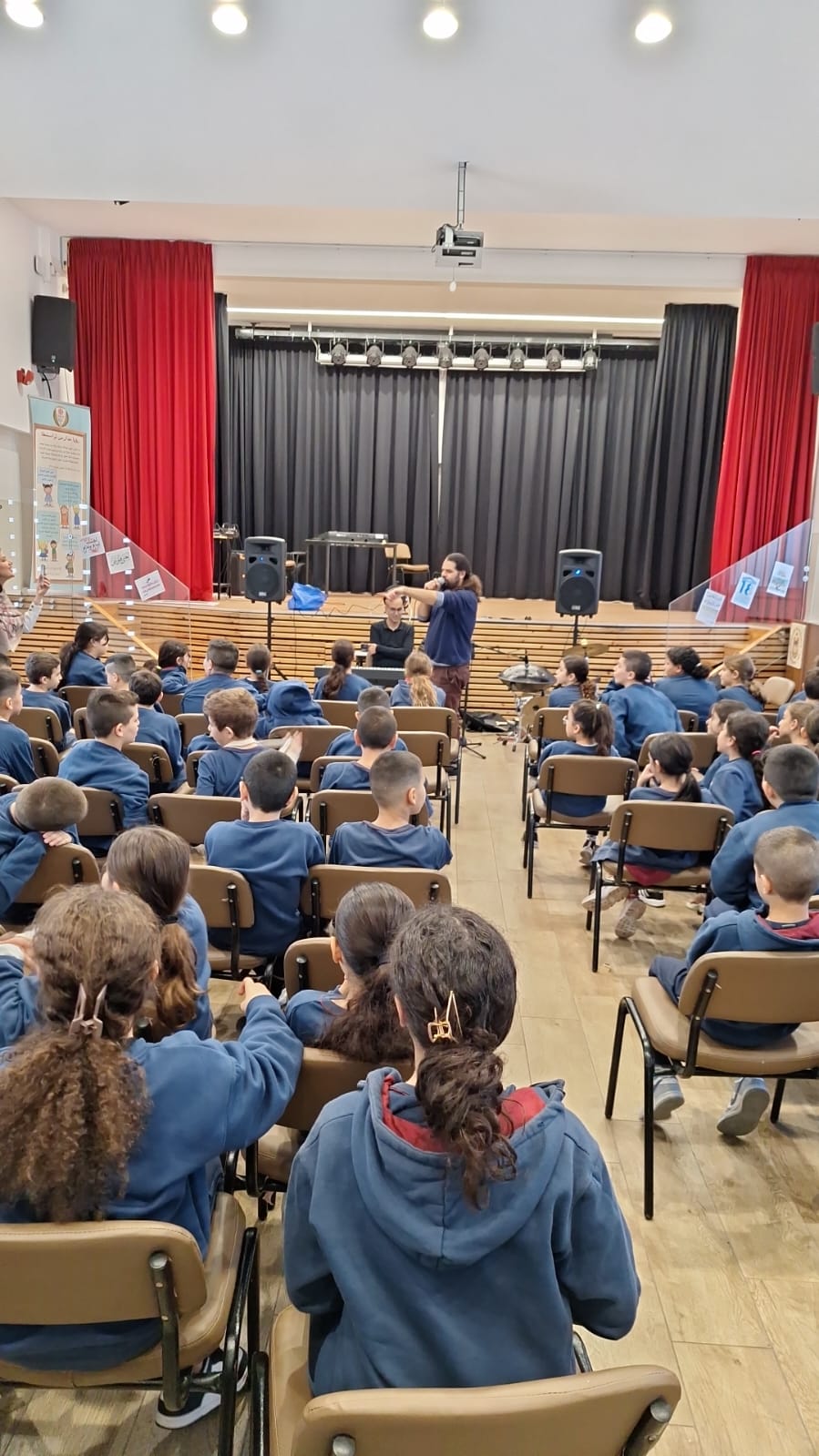
Youth-led initiatives, designed and run by young people.
Our 2026-2029 model is in its opening phase. The Arab Civic Council held its first founding assembly in July 2026, with around 40 residents taking part, and many more who asked to join but could not attend. Impact accumulates from here, as the Council takes on time-bound cases and follows them through. This page grows with that work: we publish results as they land, not before.
As the Council's work gets under way, the cases it takes on will appear here, one by one. For each case: the priority, what was done, the follow-up, and the outcome. We publish them as they happen, not before.
The Arab Civic Council held its first founding assembly, with around 40 residents taking part.
The Council's second meeting, with 31 residents taking part, moved the work into its three committees: setting priority criteria, gathering verified information, and choosing first files for follow-up.
We turn experience into knowledge others can use, documenting the model (Council formation, issue mapping, case selection, women's leadership integration, education tools) as a practical guide other mixed-city actors can adapt.